
Dental Crowns
Durable, aesthetic dental crowns in zirconia and E-max for damaged or weakened teeth.
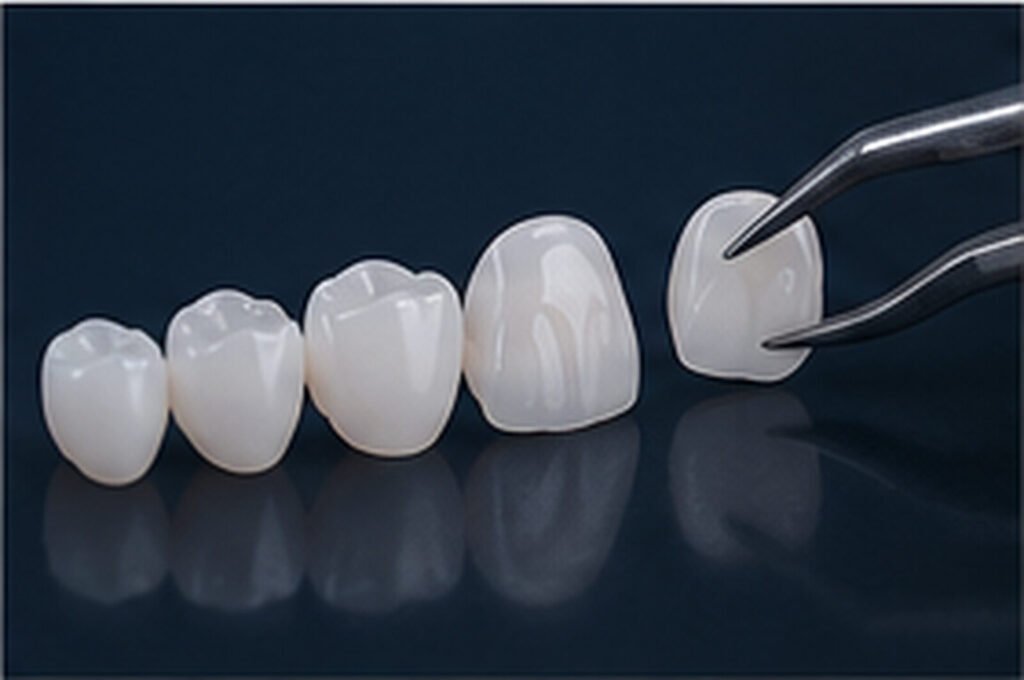
Protecting and restoring your teeth
A dental crown is a cap that covers a damaged, weakened or root-treated tooth to restore its shape, strength and appearance. Modern zirconia and E.max crowns combine durability with natural aesthetics.
When a crown is recommended
- Large fillings or significant tooth loss
- After root canal treatment
- Cracked or worn teeth
- Aesthetic improvement of shape and colour
Our approach
We use digital impressions for a precise fit and colour-match your crowns to your natural teeth. Every treatment comes with a written plan and transparent pricing.
Crown or filling: what is the difference?
A filling restores a limited cavity within the tooth, whereas dental crowns encircle and support the whole tooth to reduce the risk of fracture. A crown may be considered when tooth structure loss is extensive, after root canal treatment in weakened teeth, or where cracks are present. The decision depends on how much sound tooth structure remains and on functional demands.
What happens during treatment?
After examination and any necessary imaging, the tooth is prepared for the selected type of crown. A digital scan or conventional impression is taken and the restoration is produced in the laboratory. A temporary crown may be used in the meantime. At the try-in, fit, shade and bite are checked before the crown is cemented.
After your crown is fitted
The margin where the crown meets the tooth collects plaque easily, so brushing and interdental cleaning should not be neglected. While a temporary crown is in place, very hard or sticky foods are best avoided. If your bite feels uneven, contact the clinic rather than waiting for your next appointment.
For general oral health information, see the World Health Organization resources.
Frequently asked questions
How many appointments does a crown take?
Usually several visits covering preparation, impressions and a try-in. The timeline depends on the number of teeth and the material chosen.
What is the purpose of a temporary crown?
It protects the prepared tooth, reduces sensitivity and maintains appearance and chewing function until the final crown is ready.
Can a crowned tooth still decay?
The crown itself does not decay, but the natural tooth at the margin can. Daily cleaning and check-ups are therefore important.
Does a root-treated tooth need a crown?
Crowns are frequently recommended for posterior teeth with significant structure loss. The decision is based on the remaining tooth structure.
Is bleeding around a new crown normal?
Mild tenderness in the first days can occur. Ongoing bleeding or difficulty cleaning may indicate a fit issue and should be assessed.
You may also be interested in
Book Dental Crowns
Contact us for a free assessment and written treatment plan at our our clinic in Çankaya, Ankara.