
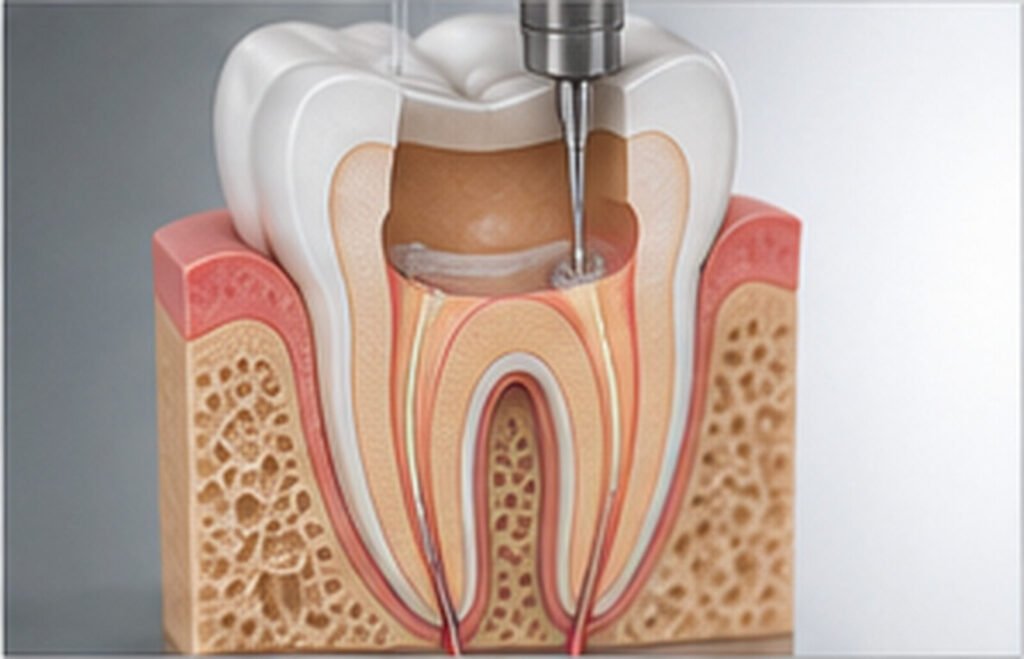
Root canal (endodontic) treatment aims to preserve a tooth in the mouth by removing infected or inflamed tissue from inside it. The goal is to keep, as far as possible, a tooth that might otherwise need extraction.
When might it be needed?
It is generally considered in situations such as:
- Deep decay or damage reaching the inner tissue of the tooth
- Persistent toothache or prolonged sensitivity to hot/cold
- Signs of inflammation at the tooth root
How is it done?
The procedure is performed under local anaesthesia. The tissue inside the tooth is cleaned, the canal system is shaped and filled with a suitable material. The tooth is often then supported with a crown.
After treatment
Short-term sensitivity may occur after the procedure and is managed with the dentist’s advice. A plan for the final restoration is important for the long-term protection of the tooth.
Frequently asked questions
Is root canal treatment painful?
As it is performed under local anaesthesia, pain is not expected during the procedure.
How many visits does it take?
It can be completed in one or several visits depending on the case, as determined by the dentist.
Is a crown needed afterwards?
In many cases a crown may be recommended to protect the tooth; the decision depends on its condition.
Which symptoms suggest root canal treatment?
Pain that lingers after hot or cold, pain that starts spontaneously or wakes you at night, tenderness on biting, swelling of the gum or a darkening tooth can all indicate that root canal treatment may be needed. In some cases there are no symptoms and findings are seen only on a radiograph, which is one reason regular check-ups matter.
- Persistent or night-time toothache
- Lingering sensitivity after hot or cold
- Swelling or an abscess on the gum
- Discolouration of the tooth
What happens if treatment is postponed?
Infection can progress to affect the tissues around the root, with increasing pain and swelling. In advanced cases saving the tooth becomes more difficult. Pain settling does not mean the infection has resolved; only examination and radiographs can establish that.
Protecting the tooth afterwards
A definitive restoration is planned after root canal treatment to reduce the risk of fracture, and a crown is frequently considered for back teeth with extensive structure loss.
Frequently asked questions
Is extraction an alternative?
Where the tooth cannot be restored or the root is fractured, extraction may be discussed alongside replacement options.
How many visits does it take?
One or more, depending on the number of roots, canal anatomy and the extent of infection.
See our root canal treatment page and read root canal aftercare for the period afterwards. Further reading: World Health Organization oral health resources.
This article is for general information only and does not replace an examination, diagnosis or treatment by a dentist.