Zirconia and E-max crowns are metal-free porcelain restorations that can be used on damaged, discoloured or reshaped teeth. Because they transmit light like natural enamel, they may be preferred for aesthetic reasons.
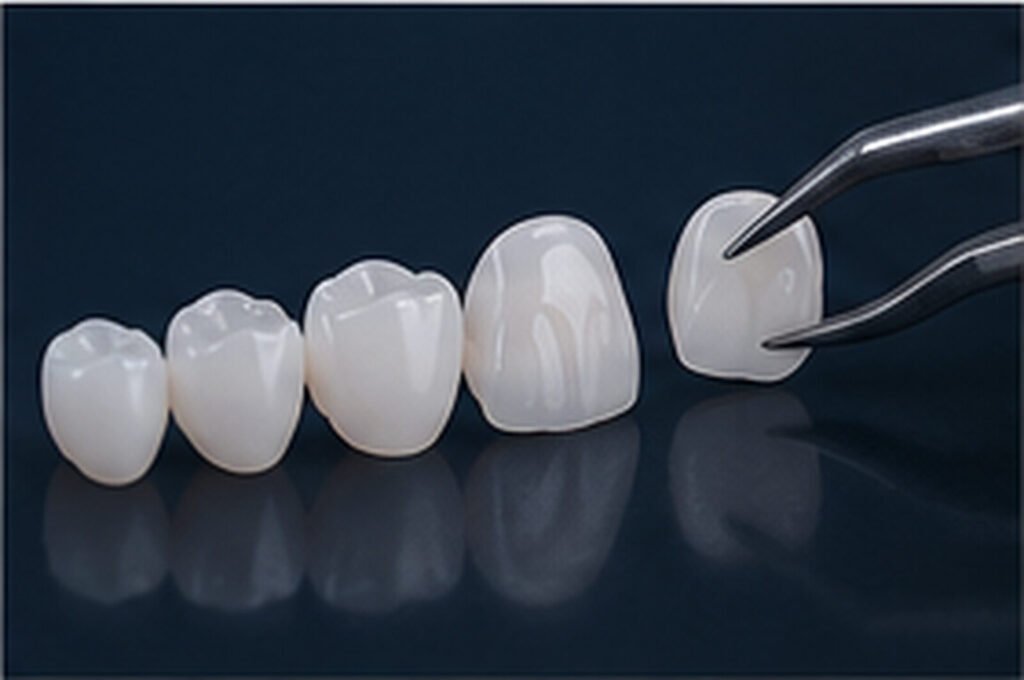
Zirconia vs. E-max
Both are metal-free; their differences lie in use and properties:
- Zirconia: high strength; may be considered for back teeth and bridges
- E-max: high translucency; may be considered for front teeth for aesthetics
- Both are biocompatible materials
When are they considered?
They may come up for discoloration, loss of tooth structure, shape irregularities or to protect a tooth after root canal treatment. Suitability is determined by examination.
How are they prepared?
They can be planned precisely with digital impressions/scanning and CAD-CAM technology. Colour and shape are matched to the person’s teeth.
Frequently asked questions
Does a crown harm the tooth?
Some preparation of the tooth surface may be needed before a crown; the amount varies by case and is planned by the dentist.
How long do crowns last?
Care, habits and regular check-ups affect their lifespan. Personal information is given during the examination.
How are crowns cared for?
Regular brushing, flossing and periodic check-ups are advised.
Where each material is typically used
Material choice depends on the position of the tooth and the forces it carries. Zirconia, being strong, is often considered for posterior teeth and bridges, while E-max transmits light well and may be preferred for single restorations at the front. Shade is selected using the neighbouring natural teeth as the reference.
Stages of treatment
Treatment usually progresses through examination, preparation of the tooth, a digital scan or impression, the laboratory stage and a try-in. A temporary restoration may be used in between. Before cementation, fit, bite and appearance are checked together and adjusted if needed.
- Examination and shade selection
- Tooth preparation and scan or impression
- Laboratory production and try-in
- Cementation after final checks
Sensitivity and settling in
Short-term sensitivity to hot and cold after preparation is common and usually reduces. If the bite feels high or uncomfortable after cementation, a small adjustment often resolves it, so contact the clinic rather than waiting.
Frequently asked questions
Are crowns always the right answer?
No. Where tooth structure loss is limited, a filling or composite restoration may be more conservative and appropriate.
Do these crowns stain?
Porcelain resists external staining better than natural enamel, though deposits at the margin can affect appearance.
See our zirconia and E-max crowns page, and for maintenance read porcelain crown care and lifespan. Further reading: World Health Organization oral health resources.
This article is for general information only and does not replace an examination, diagnosis or treatment by a dentist.