
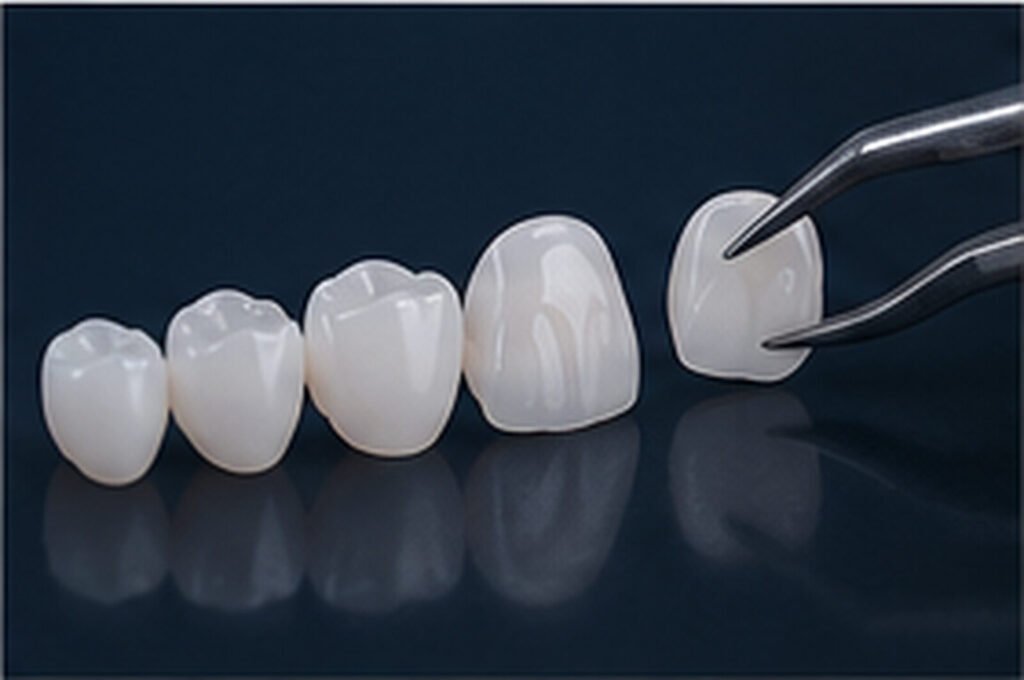
A dental crown is a restoration that surrounds a weakened, broken or root-treated tooth to restore its shape, strength and appearance.
When is it considered?
A crown is generally evaluated in situations such as:
- Large loss of tooth structure or extensive fillings
- Protecting a tooth after root canal treatment
- Cracked or worn teeth
- Aesthetic improvement of shape and colour
The process
After examination and assessment, the tooth is prepared, an impression/scan is taken and the crown is made. Colour and shape are planned to match the natural teeth.
Types of crown
Metal-free options such as zirconia and E-max are often preferred for aesthetics and durability. The suitable option is determined individually.
Frequently asked questions
What is the difference between a crown and a filling?
A filling restores lost structure, while a crown surrounds and supports the whole tooth. Which is suitable varies by case.
Is the procedure painful?
Preparation is done under local anaesthesia; pain is not expected during the procedure.
How long does a crown last?
With care and check-ups it can be used for a long time; personal information is given during the examination.
What is assessed before a crown is recommended?
The decision takes into account how much sound tooth structure remains, whether a crack is present, the condition of the root and the role the tooth plays in chewing. Radiographs show the root and surrounding bone. Where enough structure remains, more conservative options may be preferred, so not every large filling requires a crown.
- The amount of sound tooth structure remaining
- Whether a crack or fracture line is present
- Whether the tooth has had root canal treatment
- How chewing forces are distributed
What happens if treatment is delayed?
Leaving a tooth at risk of fracture without restoration can lead to a deeper fracture and fewer treatment options. The absence of pain does not always mean the problem is not progressing, so it is important that a recommended restoration is completed within the planned timeframe.
Settling in after the crown is fitted
Mild sensitivity in the days after cementation is common. If the bite feels high, chewing is uncomfortable or the gum stays irritated, a review appointment should be arranged.
Frequently asked questions
Can a crown be avoided with a large filling?
Sometimes, but very large fillings can leave the tooth more prone to fracture. Your dentist weighs these risks against the benefit of preserving tooth structure.
Is the preparation uncomfortable?
It is carried out under local anaesthesia, so pain is not expected during treatment.
See our dental crowns page and read types of dental crowns for material differences. Further reading: World Health Organization oral health resources.
This article is for general information only and does not replace an examination, diagnosis or treatment by a dentist.