
All-on-4 and All-on-6 are approaches for planning a full-arch fixed prosthesis on a small number of implants, used when there are no teeth in the jaw or existing teeth cannot be preserved. The aim is a fixed solution rather than a removable denture. Suitability is assessed individually.
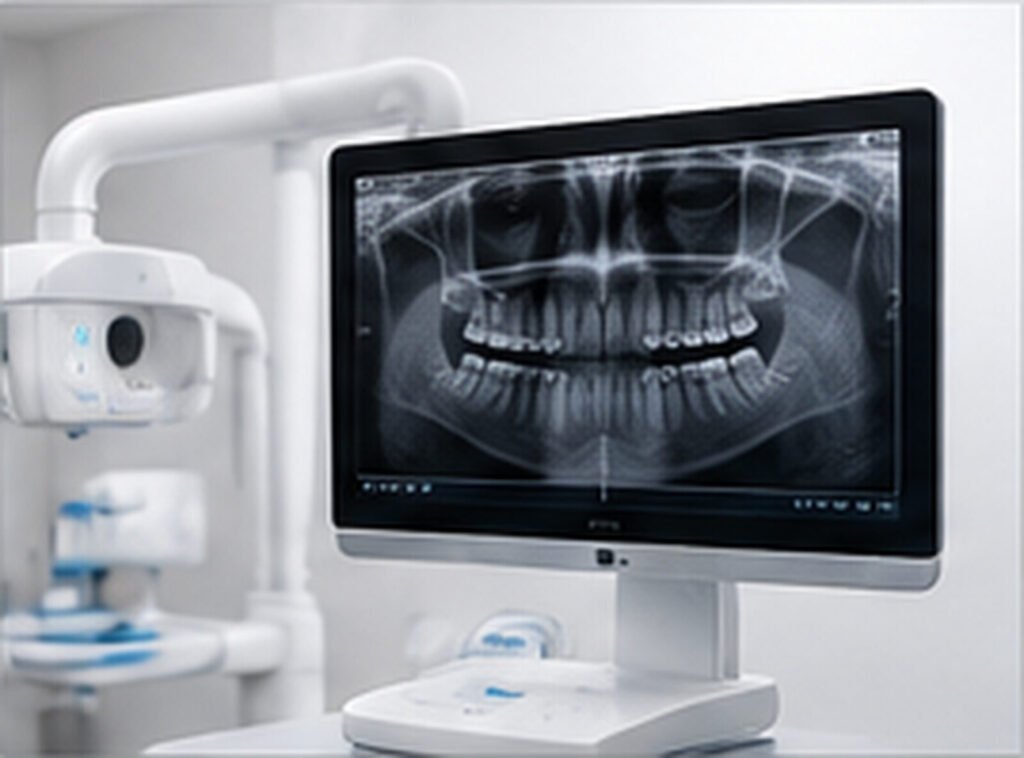
Difference between All-on-4 and All-on-6
Both are designed for a full arch; the main difference is the number of implants used — four in All-on-4 and six in All-on-6. Which option is suitable is decided by the dentist based on bone volume, jaw structure and overall assessment.
When is it considered?
It may come up in situations such as:
- Complete tooth loss
- Many teeth that cannot be preserved
- Lack of comfort with a removable denture
- A preference for a fixed solution
Planning and stages
Treatment begins with digital imaging and planning:
- Examination, CBCT (3D) imaging and assessment
- Digital planning of implant positions
- Implant placement and, in suitable cases, temporary teeth
- Preparation of the final prosthesis after healing
Frequently asked questions
Are same-day teeth possible?
In some suitable cases temporary teeth can be fitted the same day; this decision is made by the dentist based on bone and tissue condition.
When is the final prosthesis made?
The final prosthesis is prepared after healing (osseointegration) is complete. The time varies from person to person.
How is it cared for?
The fixed prosthesis and the area around the implants are maintained with suitable brushing and interdental cleaning; regular check-ups are advised.
What determines whether All-on-4 is suitable?
When a full-arch fixed prosthesis is planned, the volume and quality of the jawbone, the position of the sinus and nerve structures, the condition of the opposing arch and chewing forces are all assessed. This evaluation is based on CBCT (3D) imaging together with clinical examination. Where the bone structure allows, tilted implant placement can sometimes make treatment possible without extensive grafting.
How it differs from a removable denture
A removable denture takes most of its support from the gums and bone and is taken out by the patient. With All-on-4 and All-on-6 the support comes from implants and the bridge stays in place. Speech, chewing comfort and the adaptation period vary between individuals, and the right option is decided together after examination.
Frequently asked questions
How many appointments are involved?
Treatment usually spans assessment, surgery, a healing period and the final prosthesis, so several appointments are planned over a number of months.
Can the bridge be removed for cleaning?
It is fixed for the patient, but your dentist can remove it at review appointments when a detailed clean or inspection is needed.
Read more on our All-on-4 / All-on-6 page, see dental implants for single-tooth options, and full-arch fixed teeth for the recovery process. Further reading: World Health Organization oral health resources.
This article is for general information only and does not replace an examination, diagnosis or treatment by a dentist.