
In full-arch fixed teeth treatment, the healing period and care after implant placement are important for a healthy, lasting result. The information below is general in nature; personal instructions are given by the dentist.
The healing period
Fusion of the implants with the jawbone takes time. During this period it is important for the tissues to rest and for the dentist’s advice to be followed. If a temporary prosthesis is used, the instructions on nutrition and cleaning are followed.
Nutrition suggestions
Soft foods are generally preferred in the early period. Hard and very hot foods may be avoided. Details are planned individually.
Long-term care
For the health of the fixed prosthesis and the area around the implants:
- Daily brushing and interdental cleaning
- Periodic check-ups and professional cleaning
- Awareness of the negative effects of smoking
Frequently asked questions
When do speech and chewing become comfortable?
The adjustment period varies; most people adapt quickly. Expectations are shared during the examination.
How is the prosthesis cleaned?
Suitable brushes and interdental cleaners are used; the technique is shown by the clinic team.
How often are check-ups needed?
Regular check-ups at the intervals recommended by the dentist help detect possible issues early.
Eating during the temporary phase
While a fixed temporary bridge is in place, softer foods are usually recommended to support healing. Avoiding hard crusts, very sticky foods and extremes of temperature can make this period more comfortable. Dietary advice is individual, so the instructions given by your dentist always take priority.
Moving to the final prosthesis
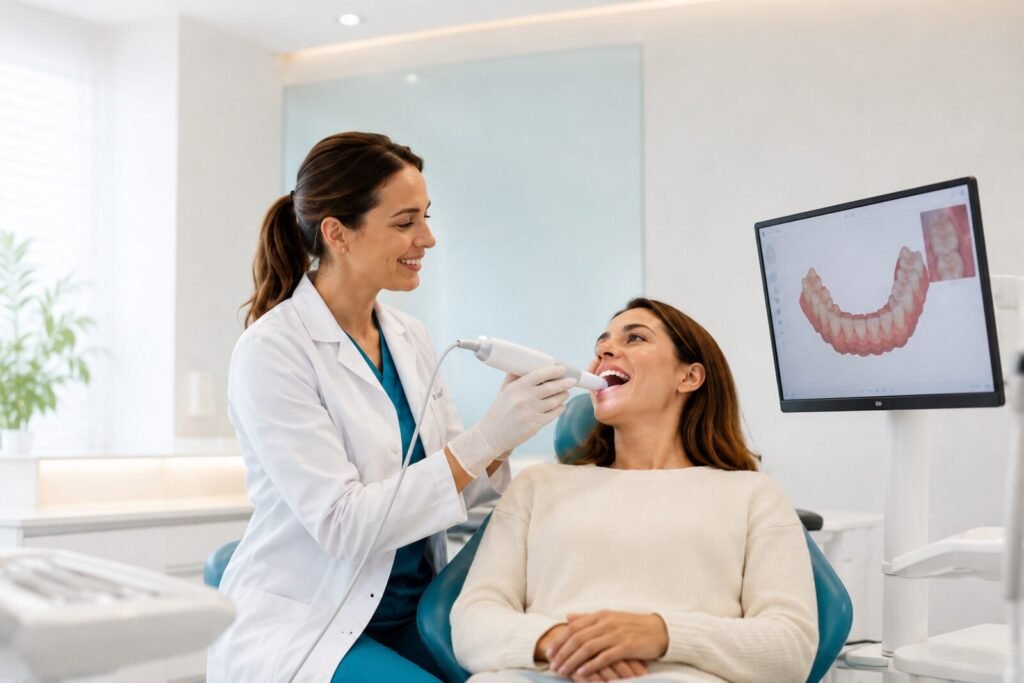
Once integration is complete, an impression or digital scan is taken and the final prosthesis is produced. At the try-in stage the bite, appearance and speech are assessed together. After fitting, cleaning methods are explained in detail and a review schedule is arranged.
- Cleaning beneath the bridge with interdental aids or a water flosser
- Screws and fit checked at reviews
- A protective night guard considered where clenching is present
Adapting to speech and chewing
In the first weeks some sounds may be formed differently and chewing can take time to feel natural. This usually settles. Reading aloud and chewing evenly on both sides can help the adaptation.
Frequently asked questions
How long does the healing phase last?
It varies with bone quality and individual healing, and is assessed at review appointments rather than fixed in advance.
Will the final bridge look different from the temporary one?
The final prosthesis is refined for shape, shade and bite, so differences from the temporary are expected and discussed beforehand.
For background see what is All-on-4 and All-on-6 and our All-on-4 / All-on-6 page. Further reading: World Health Organization oral health resources.
This article is for general information only and does not replace an examination, diagnosis or treatment by a dentist.
Geri bildirim: All-on-4 and All-on-6: What Are They? | Dent Denge